When to Stake a Newly Planted Tree
You spent the afternoon planting a young oak in your front yard — dug the hole, set the root ball, backfilled the soil, gave it a long drink of water. Then you looked at the forecast: wind gusts expected this weekend. Now you're wondering: does this tree need stakes?
It's a question our ISA Certified Arborists at Pelton's Tree & Land Services hear often, and the honest answer surprises most homeowners: most newly planted trees do not need staking. But when they do need it, doing it correctly makes all the difference between a tree that thrives and one that suffers for years.
Here's everything you need to know — from a team that has been caring for trees across Gautier, Pascagoula, and the Gulf Coast of Mississippi for over 27 years.
Do All Newly Planted Trees Need Staking?
The short answer is no — and in fact, the tree care industry has shifted significantly on this topic in recent decades. Research consistently shows that trees allowed to move and sway naturally in the wind develop stronger trunk wood and deeper, more anchored root systems than trees that are staked unnecessarily.
Movement creates a biological response in trees called thigmomorphogenesis — a process where physical stress from wind stimulates the tree to grow a wider, stronger trunk and extend its roots more aggressively for anchoring. Stake a tree that doesn't need it, and you deprive it of that stimulus.
🌿 ISA Arborist Insight
Over-staking is one of the most common mistakes homeowners and even landscapers make. If a tree can stand on its own after planting, let it. The goal of staking is to stabilize the root ball while it establishes — not to hold up the trunk indefinitely.
That said, there are specific situations where staking is genuinely necessary:
- Bare-root trees. Trees planted without a soil ball have no root anchorage at all when first planted. Staking provides critical support during the establishment window.
- Very tall or top-heavy specimens. A tree with a large canopy relative to its trunk diameter creates significant wind leverage. Temporary staking balances the load while roots establish.
- Exposed, high-wind locations. On the Gulf Coast, this is a real factor. Properties with limited windbreak — open lots, coastal frontage, hilltops — subject new trees to wind loads that established trees in sheltered yards never experience.
- Loose or sandy coastal soil. Mississippi's Gulf Coast soils are often sandy and poorly consolidated, which reduces the natural anchoring ability of a new root ball. Staking compensates until the roots spread into more stable soil.
- Trees planted during dormancy in windy seasons. Root establishment is slower during cooler months, extending the window of vulnerability.
Signs Your Newly Planted Tree Needs Support
Not sure whether your particular tree needs staking? Do this simple test within a week of planting: gently push the trunk at chest height.
Watch the base. If the root ball rocks or shifts while the trunk stays relatively still, the root ball is not anchored and staking is appropriate.
If the entire tree — trunk and root ball — sways together as a unit, the root ball is already engaging the soil and staking is likely unnecessary.
Beyond the push test, watch for these signs:
- The tree leans more than 10–15 degrees from vertical after planting
- After a rain, the soil around the base heaves or shows root ball movement
- The planting site is visibly exposed with no surrounding trees or structures as windbreak
- The tree has a high canopy-to-trunk ratio (lots of top, thin trunk)
- The trunk diameter is under 2 inches at chest height on a tree over 8 feet tall
How to Stake a Tree the Right Way
If your tree does need staking, technique matters enormously. Improper staking causes more damage to trees than no staking at all. Follow these guidelines — the same ones used by ISA-certified arborists:
Use two stakes, not one
A single stake creates a pivot point and causes the tree to bend around it with every gust. Two stakes placed on opposite sides of the root ball (perpendicular to the prevailing wind direction) distribute the load evenly and allow the trunk to flex slightly — which is exactly what you want.
Position stakes at the root ball, not against the trunk
Drive stakes 18 inches from the trunk on opposite sides, angling slightly outward. The purpose of the stakes is to anchor the root ball to the ground, not to hold the trunk upright. This is a critical distinction most DIY guides miss.
Use soft, flexible tie material
Never use wire, zip ties, rope, or any rigid material to tie a tree to its stakes. These cut into bark, girdle the trunk, and can kill a tree within a season. Use commercial tree strapping, nylon webbing, or natural burlap — something with enough give to allow movement while preventing the root ball from rocking.
Attach ties at the lowest effective point
Find the lowest point on the trunk where the tree maintains its upright position when the tie is attached, then tie it a few inches above that point. This maximizes the range of natural trunk movement while still providing the support the root ball needs.
Allow visible sway
When you step back and push the tree after staking, the upper trunk should still sway noticeably. If the tree is completely rigid from stake to crown, you have the ties too high and too tight. Loosen and re-attach lower.
⚠️ Never Do This When Staking
Never run wire through a garden hose and loop it around the trunk — this is an outdated technique that is still widely seen and consistently damages trees. The hose reduces friction but does not eliminate the girdling pressure of the wire. Use proper tree strapping only.
How Long Should You Keep Stakes In?
This is where many well-intentioned homeowners go wrong: they put stakes in and forget about them. Staking left in place too long causes exactly the kind of harm you were trying to prevent.
The general rule from ISA guidelines is to remove stakes after one full growing season — typically 6 to 12 months. For Gulf Coast Mississippi, where the growing season is long, err toward the shorter end of that range.
How to know it's time to remove stakes
- The tree stands upright without leaning when you gently remove tie tension
- When you push the trunk, the base no longer rocks or shifts
- The tree has visibly grown — new canopy growth indicates active root establishment
- A full growing season has passed since planting
Consequences of leaving stakes too long
- Girdling. Ties that remain as the trunk expands will cut into the bark, restricting the flow of water and nutrients and eventually killing the tree.
- Chronic trunk weakness. A tree that is staked for years never develops the trunk taper and wood density that wind-movement triggers. Remove the stakes and the tree may struggle to support itself.
- Bark damage and disease entry points. Any point where a tie contacts the bark is a potential wound. The longer ties remain, the greater the risk of bark damage, fungal infection, and pest entry.
Tree Staking Mistakes to Avoid
To summarize the most common errors we see in Gulf Coast yards — and the ones most likely to harm your investment:
- Staking trees that don't need it. If the root ball doesn't rock, skip the stakes.
- Using rigid or cutting tie materials. Wire, rope, zip ties, and twine all damage bark. Use only soft, flexible tree strapping.
- Tying too high on the trunk. Ties should be at the lowest effective point, not at mid-canopy height.
- Using a single stake. One stake creates a fulcrum, not a support system. Always use two.
- Forgetting to remove stakes. Set a calendar reminder for 6–9 months after planting. Stakes are temporary tools, not permanent fixtures.
- Driving stakes through the root ball. Place stakes outside the root zone and angle them slightly outward.
Beyond Staking: Complete Care for a Newly Planted Tree
Staking is just one element of getting a new tree established successfully. On the Gulf Coast, where heat, humidity, sandy soils, and tropical weather events create a challenging environment, a few additional practices dramatically improve survival and growth rates:
Mulching
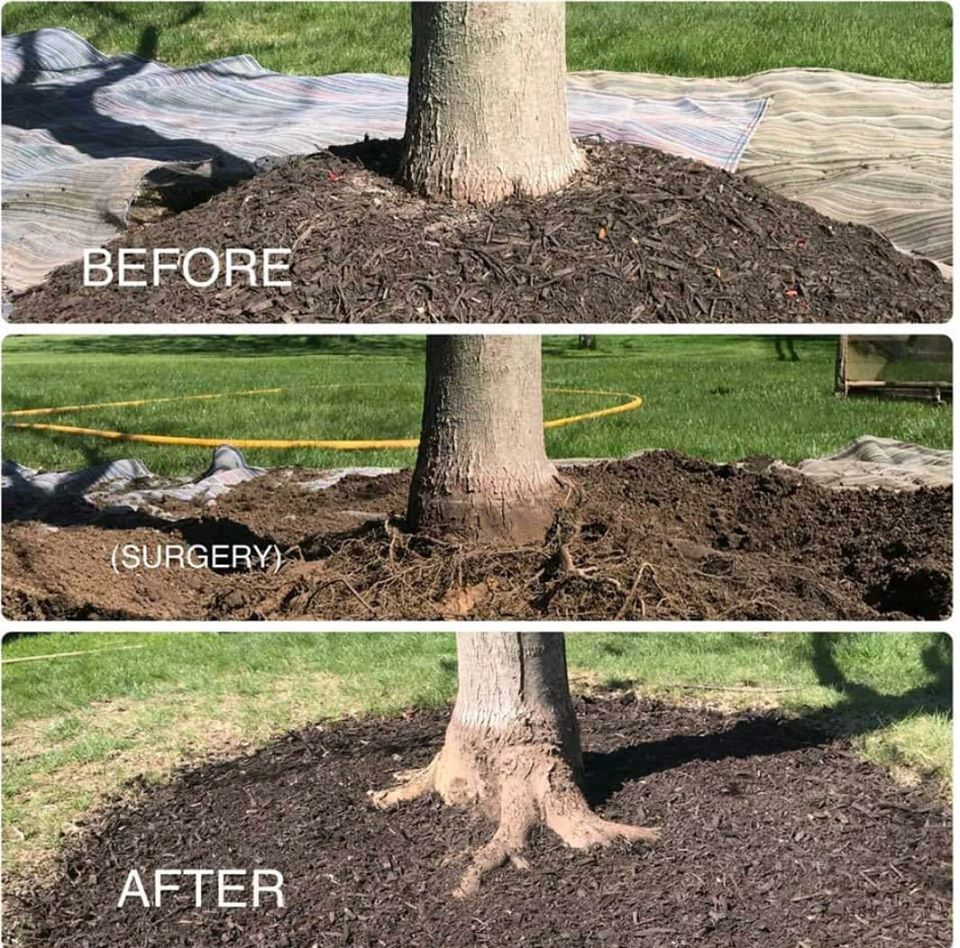
Apply a 3–4 inch layer of organic mulch in a ring around the tree, keeping it at least 3 inches away from the trunk (mulch volcanoes — piled against the trunk — cause rot and disease). Mulch retains soil moisture, moderates temperature, suppresses competing grass and weeds, and improves soil biology as it breaks down.
Watering
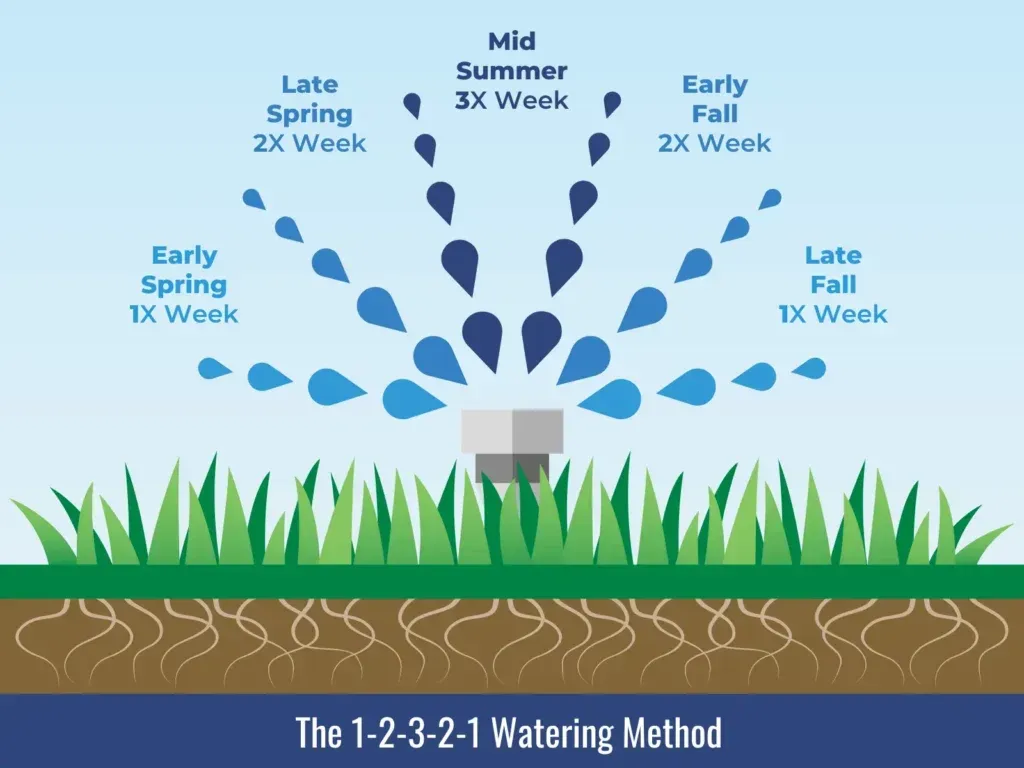
Newly planted trees need consistent moisture — not saturation — for their first two to three growing seasons. In Mississippi's heat, this typically means deep watering twice per week in dry periods. Feel 3–4 inches below the soil surface; it should feel damp but not waterlogged.
Avoiding fertilizer in year one
This surprises many homeowners: don't fertilize a newly planted tree in its first growing season. Fertilizer stimulates top growth at the expense of root development — exactly the opposite of what a new tree needs. Wait until year two, and consult an arborist before applying anything.
Watching for stress signs
Wilting, early leaf drop, yellowing, or dieback in a newly planted tree are all signs that something is wrong — often improper watering, soil compaction, or root damage during planting. Early intervention by a certified arborist can save a tree that would otherwise decline and fail.
When to Call a Professional Arborist
For most standard small- to medium-sized trees in sheltered residential settings, these guidelines will serve you well. But there are situations where professional guidance is worth every cent:
- Large or specimen trees. A 15-foot live oak, a mature Southern magnolia, or any tree over 3 inches in trunk diameter represents a significant investment. Professional planting and post-planting care protects that investment.
- Trees in Gulf Coast wind exposure. Coastal and exposed properties require more nuanced assessment of staking needs and soil conditions than a general guide can provide.
- Any tree showing signs of stress. Declining foliage, unusual growth, or pest activity on a newly planted tree warrants a professional eye before the problem becomes irreversible.
- When you just want to get it right. There's no shame in calling an expert for a tree you care about. Our ISA arborists are happy to walk your property, assess your newly planted trees, and give you a clear plan.
Questions about your newly planted trees?
Call Pelton's ISA Certified Arborists: (228) 497-6107 | Free Estimates | Gautier & Pascagoula, MS
Grow a Stronger Tree — Pelton's Is Here to Help
Whether you're planting your first tree or managing a property full of established hardwoods, the principles are the same: understand what your tree needs, give it the right support at the right time, and know when to call a professional.
At Pelton's Tree & Land Services, we've spent 27 years helping Gulf Coast homeowners build beautiful, resilient landscapes. Our ISA Certified Arborists don't just remove trees — we help them thrive from planting day through every Gulf Coast storm season.
Serving Gautier, Pascagoula, Jackson, Harrison County, and surrounding communities across Mississippi.
Ready to talk trees? We'd love to help.
(228) 497-6107 | Free Estimates | peltonstreeservices.com/contact-us