What Happens If I Don't Remove a Damaged Tree?
A cracked limb, a leaning trunk, or bark that's peeling away might not look like an emergency. But damaged trees rarely stay the same — they get worse, often quietly, until a storm, a strong gust, or simple gravity turns a manageable problem into a costly one. If you're in Pascagoula and wondering whether that damaged tree in your yard can wait, here's what's actually at stake.
At Pelton's Tree and Land Services, our ISA Certified Arborists evaluate damaged trees every week across Pascagoula and the surrounding Gulf Coast, and we've seen firsthand how quickly a "we'll get to it" tree becomes a genuine hazard. Here's what can happen if a damaged tree is left standing — and how to know when it's time to call for professional tree removal.
The Damage Rarely Stops Where It Started
A single cracked limb or split trunk isn't an isolated issue — it's usually a sign of a larger structural problem. Once a tree's bark or wood is compromised, it opens the door for decay, fungus, and insects to move in. Left alone, that damage spreads deeper into the trunk and root system over time, weakening the tree from the inside out.
- Open wounds and cracks let moisture, fungi, and pests into the tree's core
- Internal decay is often invisible from the outside until the tree fails
- A damaged limb can pull more weight onto already-weakened branches, accelerating further breakage
By the time visible symptoms show up — mushrooms at the base, bark sloughing off, or a hollow sound when tapped — the tree may already be significantly compromised.
Increased Risk to Your Property and Safety
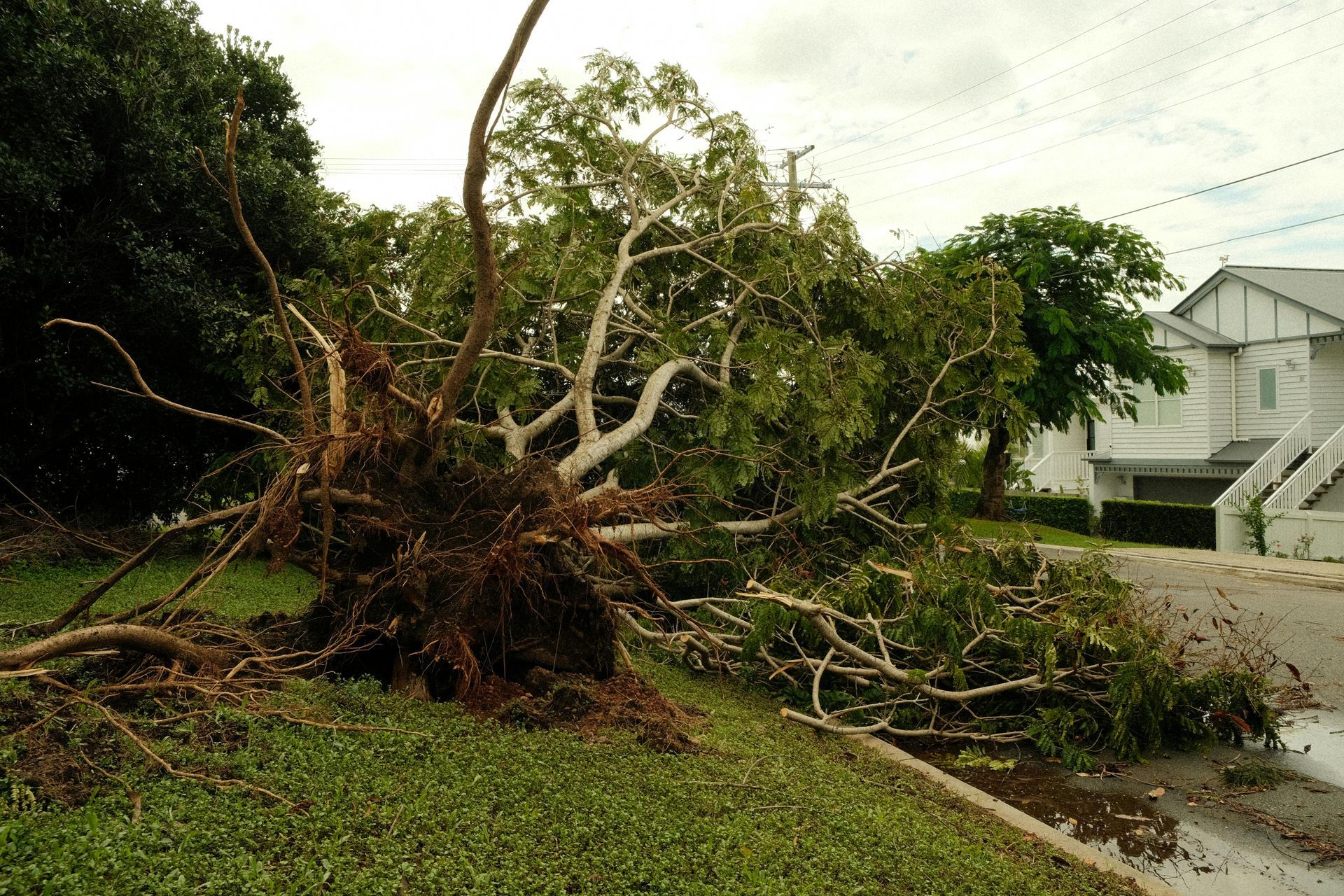
A damaged tree doesn't just risk falling outright — partial failures are just as common and just as dangerous. Weakened limbs can drop without warning, and a compromised trunk can fail in wind conditions a healthy tree would easily withstand.
- Falling limbs or trunks can damage roofs, siding, vehicles, fences, and power lines
- Root damage can destabilize the whole tree, increasing the risk of a full collapse
- Damaged trees near driveways, walkways, or play areas put people at direct risk
Homeowners insurance doesn't always cover damage from a tree that was known to be hazardous and left unaddressed, which makes early action a financial safeguard as much as a safety one.
Gulf Coast Storms Raise the Stakes
In Pascagoula, damaged trees face an added risk that inland properties don't: hurricane and tropical storm season. A tree that might hold on through an ordinary year can fail during high winds or saturated, unstable soil after heavy rain. Removing a damaged tree before storm season — rather than after it fails — is almost always the safer and less expensive path.
Signs a Damaged Tree May Need to Come Down
Not every damaged tree needs to be removed — some can be saved with proper trimming and care. Removal becomes the safer choice when you notice:
- A split or cracked trunk, especially below the main branches
- Significant leaning that's new or worsening
- Large sections of dead or missing bark
- Fungus, mushrooms, or soft, spongy wood at the base
- Exposed or damaged roots
- More than 50% of the canopy affected by storm damage
If the damage is limited to a few problem limbs, our tree health care team may be able to save the tree with targeted trimming instead of full removal — an arborist evaluation is the only reliable way to know which category your tree falls into.
What Professional Removal Involves
Pelton's Tree and Land Services is a certified, state-licensed arborist company, fully licensed, bonded, and insured for up to $1,000,000. When removal is necessary, our team starts with an on-site evaluation of the tree's condition, its lean, and its proximity to structures or power lines, then removes it using techniques suited to the tree's size and location.
We serve Pascagoula and the surrounding Gulf Coast, including Ocean Springs, Moss Point, Gulf Hills, and Gautier, with both residential and commercial tree removal services. Depending on your city and property, a permit may be required before removal — our team can help you navigate that process.
Have a damaged tree you're not sure about? Call Pelton's Tree and Land Services at (228) 497-6107 for a free on-site evaluation.
Request your free estimate through our contact page, and get a clear answer on whether your tree needs removal or can be saved.
FAQs
Is it dangerous to leave a damaged tree standing?
Yes. Damaged trees are more likely to drop limbs or fail entirely, especially in wind or storms, putting your property, vehicles, and anyone nearby at risk.
Can a damaged tree be saved instead of removed?
Sometimes. If the damage is limited to specific limbs, professional trimming can often address the problem. Trees with significant trunk splits, root damage, or extensive decay usually need to be removed.
How much does damaged tree removal cost in Pascagoula, MS?
Costs typically range from $300 to $2,000, depending on the tree's size and the complexity of the removal. We provide transparent, on-site estimates for every job.
Do I need a permit to remove a damaged tree in Pascagoula?
It depends on the tree's size, species, and location relative to property lines and structures. Our team can help you determine whether a permit is required as part of your
tree removal estimate.